
How YouTube Challenges My Thinking
Do I start writing books differently?

For decades, I have been a theology teacher. I teach theology by teaching writing. Why? This is how we assess students’ performance. Yes, attendance, class presentation, and weekly postings on learning platforms count. Producing a well-crafted final paper is often a significant factor in determining students’ academic achievement in the course.
A paper needs to have an argument, evidence, and structure. Yes, style too, but that comes after years of training. A theology paper is different from a diary entry or a sermon because it needs to have a cogent argument. My students often don’t know how to begin.
I introduced the narrative arc to help them visualize the paper’s various parts. It begins with an introduction that explains what the paper is about and provides a roadmap. Then there will be different sections of the paper to build a case, followed by the conclusion. The various parts need to be joined together to form an arc, and the organization needs to make sense.
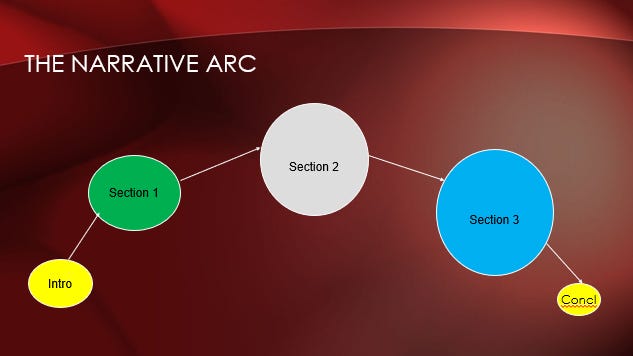
I have taught this to hundreds of PhD students in the Asian Theological Institute (ATI) to help them visualize their dissertations. ATI mentored Asian and Asian American students in writing their dissertations and developing their careers. Many have not written anything 200-plus pages long, and they have a hard time fitting different parts together. I asked them to sing the tune of the arc: what part of it is the loudest and most audible (the most important part).
Years ago, I attended a workshop given by the editor of a press on how to get published. She noted that although many dissertations include thorough literature reviews, they often cannot be published because they fail to contribute significant new insights. This is extremely critical advice because the rule in academia is “publish or perish”!
Students lack fresh ideas for several reasons. Culture, gender, race, and class are crucial factors. Howard Gardner, the Harvard professor who introduced the concept of “multiple intelligences,” went to observe how kids in China learn, comparing it with the Western style of learning.
He noted that Chinese students learn by imitation, repetition, and the acquisition of skills before creating something new. Unlike other approaches, Western students are typically encouraged to share their ideas, try new things, and explore even before they fully grasp foundational principles. Gardner argues that both modes of learning are important.
Due to cultural conditioning, some educators note that Asian students excel at repeating others’ ideas rather than independent thinking. This may be good at the college level, but not enough in graduate schools. And not enough for turning a dissertation into a book!
If we look at the narrative arc, PhD students spend years reading, learning, and writing the first few chapters of the literature review. Then comes the fourth or fifth year, when the scholarship runs out, and the clock is ticking. They have to finish by any means. So the last chapter, which should be the most important, receives far less attention. They are quick to apply a (Western) theory or model to their own situation, or present poorly developed conclusions that lack clear reasoning.
I remember the editor of the press asked, “What if we turn the dissertation around, and start with the final chapter?”
Most academics do not think like this. We are more used to slowly building the case, marshaling the evidence, and then laying out our conclusion at the end. There is a logical sequence to it. This style is common in numerous books. Isn’t writing about modeling after others?
In the last two months, I have learned how to grow my Kwok ‘n’ Roll YouTube channel and watched how successful YouTubers explain their craft. Mike and Matty, Vietnamese-American medical doctors turned YouTube entrepreneurs, have 1.37m subscribers. Matty explained how to write a killer YouTube script. He divided the script into various parts: the hook, introduction, main points, and outro.
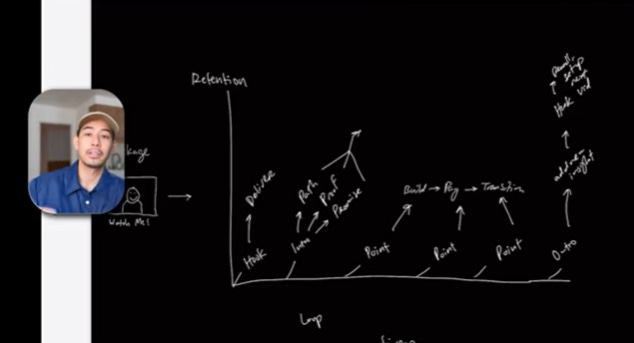
The hook is the first 10-30 seconds of the video, which is the most important part. The hook is meant to fulfill the promise made in the title and thumbnail. This is to explain why this video will bring value to the viewer.
I started to think differently:
My previous videos underperform because I did not pay enough attention to the hook. I have not made a clear case for why viewers need to watch it. Translate in academic writing: What will I say in my 45-second YouTube Short that summarizes the book’s argument? This is the so-called “elevator speech” about the book. When we push the PhD students, they find this very hard. In the process of writing the dissertation, they are still searching for what the core argument of their work is. Sadly, some can’t say it even when they finish the dissertation.
A YouTube video is different from a book. A YouTube video competes in an attention economy, whereas a book appeals to more serious learners willing to devote time to it. But I have heard academic editors complain that people are not buying books. We are acquiring knowledge through YouTube, TikTok, social media, and group chats. Books certainly have their place in the knowledge economy, but shouldn’t they be written in a way that is more enticing and reader-friendly?
Knowledge = money? I know that Foucault wrote knowledge/power, but knowledge=monetization? This really got me thinking. Ali Abdaal, a British medical doctor turned YouTuber (6.59m subscribers), said we can make videos for fun, fulfillment, and finance. I created my YouTube channel like a hobby: for fun and fulfillment. I didn’t think it was a business. But Abdaal said, “Business means providing value for people.” Why would people watch your video, given that time and attention are precious commodities? It is because it brings value to them: education, entertainment, inspiration, career development. . .
I did not want to think that everything should be dictated by the capitalist or attention economy. I did not write my book on postcolonial theology to bring “value” to people. I pretty much wrote it for fun and fulfillment. But shouldn’t I think about the “value” it brings? I am not talking about writing something like a self-help book (which, by the way, has a craft of its own). I am thinking of how academic writing will be different. Do we want to put a hook at the beginning of the book? Should we create different tension points to retain readers (The Diary of a CEO has an emotional peak every 8-10 minutes)? YouTube has chapter markers. How can we make the chapter titles more interesting and provide pointers throughout the book to increase retention? Long videos do not succeed on their own. They succeed because they are engineered to justify their length. What can we learn from this in a book?
Learning the YouTube game pushes me to think differently about knowledge production and dissemination in the attention economy in our digital age. People worldwide spend about 6 hours and 54 minutes on screens every day. The average US screen time is about 7 hours and 2 minutes. How can I, a postcolonial theologian, influence the public square without knowing how the attention economy works?
Ma’am, as a student and teacher of theology I find your thoughts are trailblazing! I used to think whether it was ok to think about youtube followers and adding value and finance. Thank you for sharing your thoughts. Lots to think about!
Reminds me of teaching college and graduate level essay writing. I’d have printed this out and given it to my students. Though I’m glad to have retired before AI came along.