
Translating Global Feminism
Can we build a global movement in our time?

In the past two and a half years, I have had the opportunity to attend conferences on World Christianity in Accra, Ghana; liberation theology in Harare, Zimbabwe; decolonial theological education in Brasilia, Brazil; and Anglican women’s theology in Nairobi, Kenya, and to meet with women theologians, educators, and activists from various parts of the world. I listened to panels on Pentecostal women in Africa, indigenous women’s spiritualities in the Americas, and women’s lack of opportunities in theological education and the church.
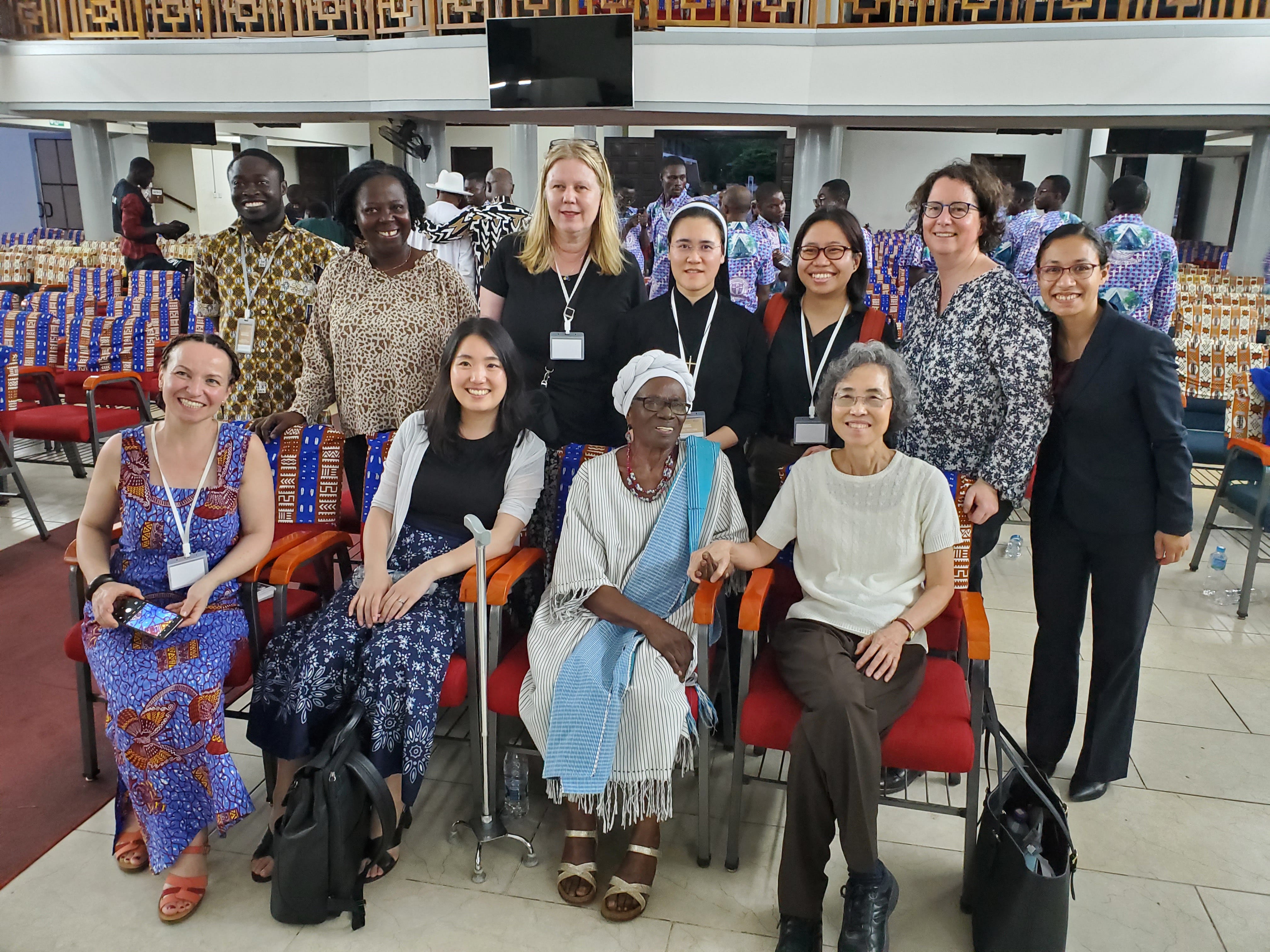
As I listened to women’s struggles, agency, and ministries from many parts of the world, I thought about the topic “translating global feminism.” How do we understand and conceptualize the diverse expressions of feminism in different settings?
The word “translation” comes from Latin, meaning “to transfer.” Do we have an original version of feminism that is transported to other cultures and rendered into local languages and idioms?
Many women in the two-thirds world do not want to be associated with the term “feminism” because the word is often used to describe Western middle-class, white women’s movement. Global feminism, for them, may not be a blessing, but can be a superimposition of Western values and lifestyles. Because of Western hegemony, globalization often means Westernization. And globalization in the past decades has contributed to the rise of fundamentalisms of all kinds, making women’s lives harder and more restricted than before.
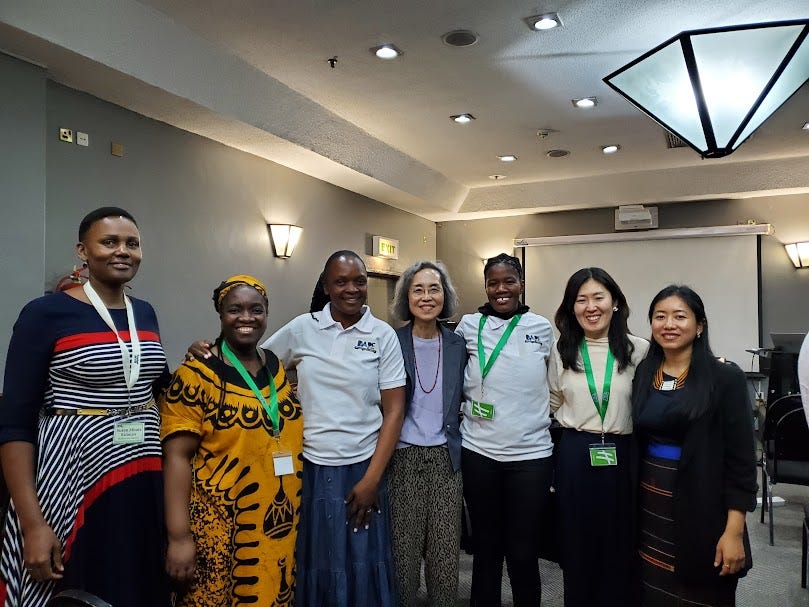
But global feminism need not be conceived as a top-down, prepackaged movement translated from elsewhere. It can also refer to a global women’s movement from the ground up. There are, in fact, many feminisms, each defined locally and contextually by women themselves. Feminism in Ghana, for example, would look very different from feminism in Brazil. Instead of taking Western feminism as the blueprint, Nigerian women may have more to learn from women’s struggles in Lebanon. The global feminist movement can be characterized as multilingual and pluriphonic, with diverse accents and open to ongoing creolization.
Unfortunately, many of us in the U.S. are at a disadvantage because we live and operate in a predominantly monolingual culture, while the majority of the world lives in bilingual or multilingual societies. Living in a superpower, we are not required to acquire other tongues, literally and metaphorically.
Postcolonial theorist Gayatri Spivak says that we should regard our privilege as our loss. The challenge for us is understanding the multilingual and multicultural expressions of feminisms so that we can be ethical subjects in an increasingly interconnected world. This is especially pertinent to me, as I have taught courses on “Feminist Theologies in the Global South” and have been involved in translating and editing women’s theologies from other parts of the world, including Hope Abundant: Third World and Indigenous Women’s Theology.
In her article “The Politics of Translation,” Spivak writes that “the task of the feminist translator is to consider language as a clue to the workings of gendered agency.” Spivak argues that to do a good translation, we have to pay attention to the text’s rhetoricity, logic, and silence. I want to draw on her insights to discuss the translation of global feminism. To understand feminism across different parts of the world, we have to learn how women use language and rhetoric to construct meaning and make sense of their worlds.
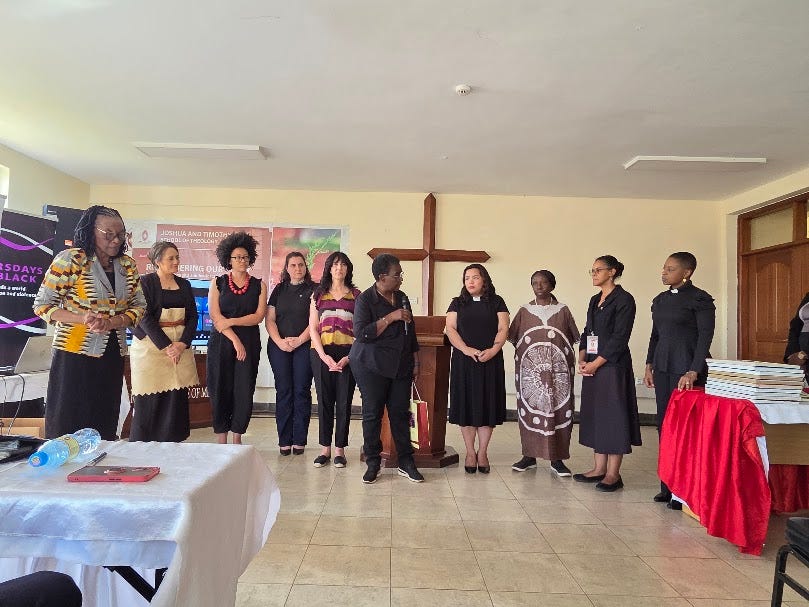
In Accra, I had the joy of meeting Mercy Amba Oduyoye, a pioneer and catalyst of African women’s theology, after many years. She has used African stories, proverbs, idioms, and myths to construct her theology and often speaks of a mothering God. We have to understand that the word “mothering” carries rich meanings in the African familial system, and the nurturing role is crucial in the face of poverty and life-and-death realities on the continent. Some of the women in the West might criticize that the image of a mothering God reinforces the gender stereotypes that women are caring, nurturing, and compassionate.
The challenge is that we often do not know enough about the cultural and social worlds of these women and may easily superimpose our own cultural and epistemological frameworks onto theirs. We hear the words, but really don’t understand the rhetoric, and hence only know their feminist politics and theology superficially. In our liberal academy, we often say that we want to be in solidarity with other women in their struggles. But without learning other women’s languages and their meaning-making processes, such solidarity could be skin deep.
To be a good translator of global feminism, we need to pay attention to what Spivak calls the social logic, social reasonableness, and the possibility of disruptive practices in women’s worlds. I once heard a Muslim feminist ask, “Why is it OK for a woman to be both a Christian and a feminist, but a Muslim woman must give up her religion to become a feminist?” American mass media has created a social logic that Islam and feminism are incompatible. We are bombarded with stereotypical images of Middle Eastern women wearing the hijab, symbolizing their modesty and subordination. The hijab as portrayed in the media serves as a marker of cultural difference and female submission.
Yet, in her book A Quiet Revolution, Harvard professor Leila Ahmed shows that some Muslim women in the U.S. have purposely put on the hijab after September 11. In the midst of the war on terrorism, wearing the hijab can be a sign of solidarity with the Muslim community, and a gesture of defiance. Women are claiming their agency and their subjecthood, challenging the invisibility of the Muslim community in America. Without knowing the history of wearing the hijab and the hijab as a multivalent symbol, we will miss the social cues and superimpose our own social logic onto other women.
The most difficult part of translating global feminism is addressing women’s silence. Spivak famously asked, “Can the Subaltern Speak?” Here we have to ask questions such as “Who are the women who are silenced?” “How have the lives of the gendered subaltern been represented?” “Under what conditions do women in the majority world enter into the knowledge system of the Western academy?” “Even if poor and marginalized women have spoken, do we understand their rhetoric and logic?” “In translating women’s work from another culture into a dominant European language, what compromises have been made to render it intelligible?”
In American culture, we often associate speaking with being active and taking part, and silence with passivity and disengagement. But this is not the case in other cultures, especially in East Asia. In Enfolding Silence, Bret Esaki offers a theory of non-binary silence and a multilayered reading of silences in gardening, origami, jazz, and monuments in Japanese American communities as they faced racism and oppression.
In the classroom, I have often encountered international women students who remain quiet. When I ask a question, these students have to translate it into their cultural context, and by the time they come up with a comment or answer, the discussion may have moved on. Many know that, even if they speak up, the majority lack the historical context to understand what they are saying. Therefore, I do not assume their silence to mean they are not interested in the class. To the contrary, it may signal active listening, figuring out what they are learning, and translating it to their contexts and back. My challenge is to provide different ways to engage and participate so that these students feel comfortable sharing.
Translating global feminism is not easy because it often reveals our ignorance, indifference, and impatience. So my question to you is “What kind of risk-taking are you prepared to take to enter the social and cultural worlds of other women and be transformed in the process in order to be agents of social change?”
Brilliant, just brilliant as always Prof. Pui Lan. Here you name the conundrum also for indigenous women where our hesitation is interpreted as silence whereas in reality it is so often simply a pain filled pause in the face of unending blatant racism.